
Innovation in Digital Health
Innovation in Digital Health (eHealth)
Digital health is transforming the way healthcare is delivered, monitored and organized worldwide, driven by medical AI, connected devices, telemedicine, immersive technologies and secure health data platforms. Healthcare systems increasingly need engineers who can bridge biomedical science, digital technologies and clinical practice to design, evaluate and deploy innovative solutions at scale. The Innovation in Digital Health track of the BME Paris Master responds to this demand by training interdisciplinary biomedical engineers ready to lead this transformation from research to real world implementation.
The Innovation in Digital Health M2 track aims to:
- Develop interdisciplinary digital health engineers able to integrate biomedical knowledge, digital and emerging technologies into clinically relevant solutions.
- Train students to design, prototype and clinically validate digital health solutions, ranging from data driven applications to virtual and connected environments for healthcare.
- Foster innovation and entrepreneurship, enabling graduates to work with industry, startups and clinical partners to bring digital health products and services to market.
- Provide a strong grounding in ethics, regulation, industrial and environmental aspects of biomedical engineering and health data.
- Prepare students for careers in industry, startups, hospitals, consulting or PhD programs in biomedical engineering and digital health.
This training program is part of the DigiHealth project, which was awarded to Paris Cité University as part of the ‘Skills and Jobs of the Future’ call (AMI CMA, France 2030) aimed at supporting the emergence of talent and adapting training programs to the skills needs of new sectors and jobs of the future in digital health.


Program overview and key strengths
The Innovation in Digital Health (eHealth) M2 track is a one year, full time specialization (60 ECTS) within the international BME Paris Master.
This program is built on three pillars: technical proficiency, innovation leadership and ethical responsibility. It combines a core curriculum in digital health with a five-month innovation project conducted in collaboration with clinical and industrial stakeholders. The program focuses on the entire data pipeline, from the initial collection of physical data to advanced computational analysis, while imparting the professional and innovative skills essential to transform lab prototypes into marketable products. This technical training also emphasises responsible engineering and ethics, ensuring that the technology complies with the strict legal and moral rules governing the healthcare system. Such a curriculum aims to equip students with the skills and knowledge necessary to handle the practical challenges of healthcare while protecting patient safety and data security.
Key strengths of this track include:
- A curriculum that spans digital health technologies, numerical methods, virtual environments, innovation & entrepreneurship, ethics and regulation of health data, aligned with international benchmarks in digital health education.
- Training in healthcare data analytics and visualization, cybersecurity and regulatory frameworks preparing students for data intensive, secure digital health environments.
- Strong integration with the BME Paris ecosystem, giving access to cutting edge research labs, hospitals (AP HP), medtech / digital health companies and incubators.
- A 21 ECTS eHealth innovation project where students work on real world challenges with clinicians and industry, from needs analysis to proof of concept and evaluation.
Semester 3
Common core courses (5 modules, 30 ECTS)
Digital Health Technologies (6 ECTS)
Course Title: Digital Health Technologies – 6 ECTS
Description: Introduction to sensors, acquisition chains and signal processing for e health applications, combined with basic analog and digital electronics (e.g. microcontroller-based platforms) and rapid prototyping using 3D scanning and 3D printing. Students design and evaluate connected medical device concepts in realistic healthcare scenarios.
Keywords: sensors, signal processing, electronics, prototyping.
BME in Digital Health (6 ECTS)
Course Title: Biomedical Engineering in Digital Health – 6 ECTS
Description: Explores how biomedical engineering concepts are integrated into digital platforms for diagnosis, monitoring and therapy, translating biomedical knowledge into clinically meaningful solutions.
Keywords: biomedical engineering, connected medical devices, telemedicine, robotics.
Numerical Methods for Digital Health (6 ECTS)
Course Title: Numerical Methods for Digital Health – 6 ECTS
Description: Introduction to numerical modeling and algorithm for e health, including signal and image processing, machine learning and AI based methods, plus data science for healthcare information systems. Students also address communication and security aspects while implementing and evaluating solutions in realistic case studies.
Keywords: numerical methods, machine learning, AI, data science, e health systems.
Virtual Environments in Healthcare (6 ECTS)
Course Title: Virtual Environments in Healthcare – 6 ECTS
Description: Covers the design and evaluation of virtual, augmented and mixed reality (VR/AR/MR) systems for training, surgery, rehabilitation and patient engagement, including digital twins, human machine environment interfaces, force feedback technologies and emerging health metaverse applications.
Keywords: virtual reality, healthcare, haptics, metaverse.
Innovation & Entrepreneurship in Digital Health (6 ECTS)
Course Title: Innovation & Entrepreneurship in Digital Health – 6 ECTS
Description: This course focuses on innovation engineering and design, entrepreneurship fundamentals and value analysis to build viable business models and market access strategies for digital health solutions, while developing management and communication skills with clinical and industrial stakeholders.
Keywords: innovation, entrepreneurship, business model, market access, communication.
Semester 4
Common core courses (30 ECTS)
Interdisciplinary Biomedical Seminar (3 ECTS)
Course Title: Interdisciplinary Biomedical Seminar – 3 ECTS
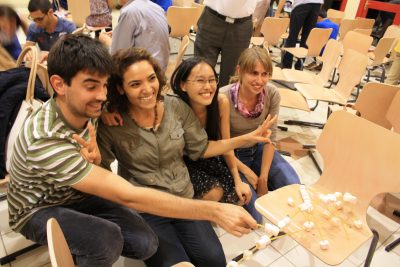
Description: This module is common to the 5 tracks of the master. Multidisciplinary student teams are challenged to design an innovative scientific and technological project in biomedical engineering. Through lectures, seminars and coaching sessions, teams develop creativity and collective intelligence, learn to address a scientific question and design an original research project.
Keywords: teamwork, creativity, critical thinking, research design, innovation, interdisciplinarity
Ethical, Industrial and Environmental aspects in biomedical engineering (3 ECTS)
Course Title: Ethical, Industrial and Environmental aspects in biomedical enginnering – 3 ECTS
Description: Addresses ethical issues, industrial constraints and environmental impact of biomedical and digital health technologies. Case studies develop students’ ability to design responsible, sustainable and patient centred innovations.
Keywords: ethics, scientific integrity, industry, environment, responsibility
Regulation and Cybersecurity of Health Data (3 ECTS)
Course Title: Regulation and Cybersecurity of Health Data – 3 ECTS
Description: Introduces regulatory frameworks and cybersecurity principles for digital health systems. Students learn privacy by design, risk analysis, access control and incident prevention in health data environments.
Keywords: regulation, cybersecurity, health data, privacy, risk
eHealth Innovation Project (21 ECTS)
Course Title: eHealth Innovation Project – 21 ECTS
Description: The capstone eHealth project is carried out in France or abroad, conducted over at least 4 months (5-6 months recommended), in collaboration with clinical or industrial partners. Internships take place in public and private innovation labs and start-ups in the field, including partner ecosystems such as Future4care, Paris Santé Campus, @HotelDieu.
Core competencies
Graduates will acquire:
- Scientific and Technical competencies:
- Digital health technologies (sensing, connectivity, architectures, interoperability, standards).
- Numerical methods for modeling, simulation and data processing in healthcare.
- Virtual and mixed reality environments for clinical training, therapy and patient engagement.
- Health data analytics, visualization and basics of AI/data driven decision support.
- Innovation and professional competencies:
- Innovation management and entrepreneurship in digital health (design thinking, business models, valorization, IP).
- Project management in multidisciplinary, international teams.
- Scientific communication and interaction with clinical, industrial and regulatory stakeholders.
- Responsible engineering competencies:
- Ethics of digital health and AI, industrial and environmental constraints in biomedical engineering.
- Understanding of regulation and cybersecurity for health data and digital medical technologies.
Career opportunities
The track prepares graduates for a wide range of positions at the interface of engineering, healthcare and digital technologies, in hospitals, industry, startups, consulting and research.
Typical roles include:
- Digital Health Engineer / eHealth Specialist
- Product or Project Manager in digital health, telemedicine or connected medical devices
- Biomedical / Clinical Data Analyst, Health Data Engineer
- Innovation and Entrepreneurship roles in medtech, digital health startups or innovation units
- UX / Systems Engineer for virtual and immersive healthcare environments
- PhD candidate in biomedical engineering, health data science or neuro /medtech related digital health.
Partners




Do you want to know
more about
the course schedule ?
1300
graduate
students
since 2010
90
nationalities
represented
since 2010
50%
bme graduates
continue their
education with
a phd